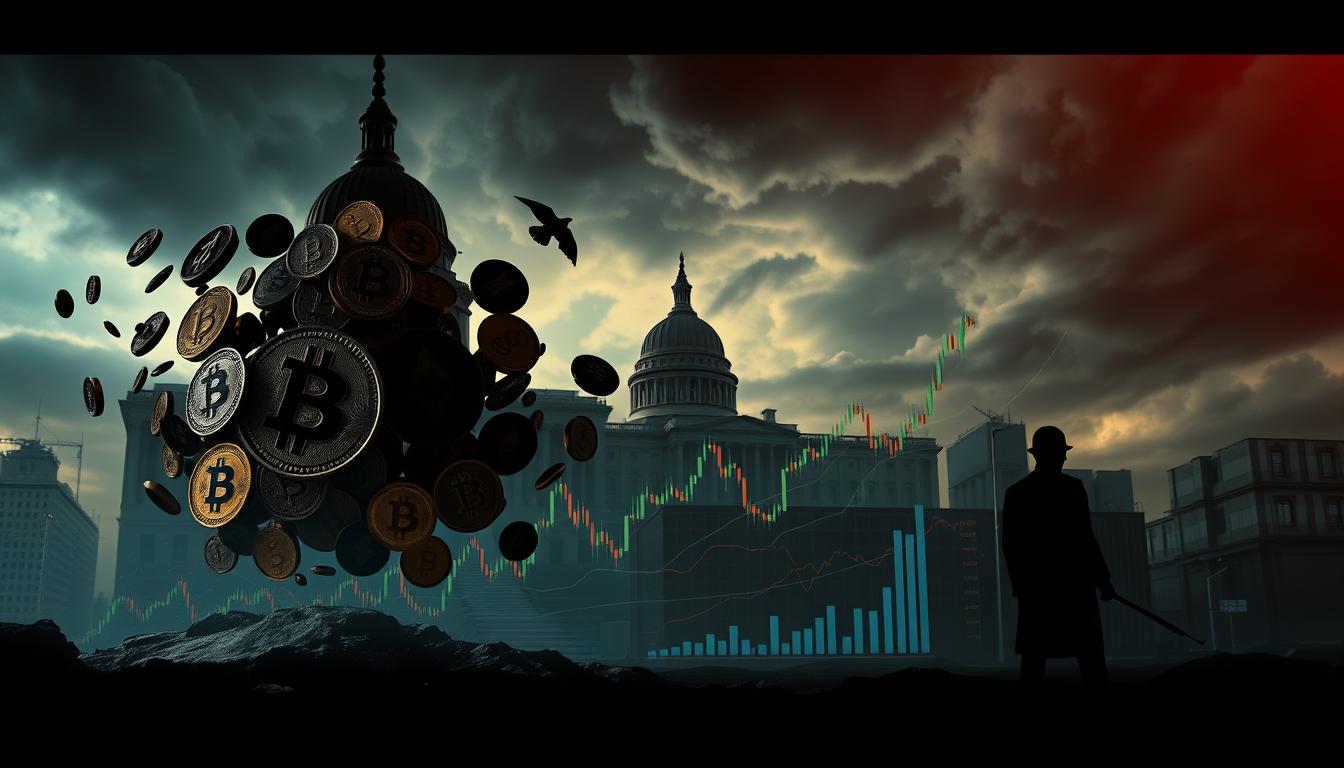


Today, navigating the crypto market means facing economic uncertainty head-on. Assets like Bitcoin and Ethereum see constant price changes. Investors must stay flexible to keep up.
Global economic pressures also affect crypto investments. It’s crucial to stay informed to weather these storms.
Key Takeaways
- Crypto market navigation demands focus on economic trends and price swings.
- Economic uncertainty shapes how digital assets perform during downturns.
- Successful cryptocurrency investment needs real-time analysis of market volatility.
- Investors prioritize risk management amid shifting global financial conditions.
- Strategic planning helps protect portfolios in unstable economic climates.
Tracking Bitcoin’s swings or analyzing DeFi trends is key. Understanding these factors leads to safer investments. This guide offers tools and insights for navigating today’s markets.
Understanding the Current Crypto Market Landscape
Understanding the crypto market means looking at key crypto market indicators. These indicators shape the market’s path. Let’s explore what’s driving today’s trends.
Key Market Indicators in 2023
Traders watch daily market analysis to see how things are moving. Important signs include:
- Trading volume changes show how active investors are
- How much of the market Bitcoin and altcoins hold
- What people are saying on social media and in news
Major Cryptocurrencies Performance Metrics
In 2023, cryptocurrency performance shows big differences among top coins:
| Coin | Price Change (%) | Market Cap ($B) |
|---|---|---|
| Bitcoin | +12% | 0.64 |
| Ethereum | +28% | 0.29 |
| Top 5 Altcoins | +34% | 0.15 |
Emerging Trends Reshaping Digital Assets
Digital asset trends now focus on blockchain’s real-world uses:
- DeFi platforms handle over $80B in TVL
- NFT sales are up in gaming and art
- More companies are teaming up with blockchain
These changes show blockchain technology is moving from just speculation to real-world use. Keeping up with these changes helps investors stay on track with the market.
How Economic Uncertainty Influences Cryptocurrency Valuations
Economic uncertainty affects crypto values in big ways. When inflation goes up or stock markets fall, the link between digital currencies and real-world issues becomes clear. People see Bitcoin as a safe bet when prices soar, but its value also changes with market mood.
- Inflation Hedge: Bitcoin’s price often rises when traditional currencies weaken, mirroring gold’s historical role.
- Market Sentiment: Fear of economic downturns drives speculative buying or panic selling, altering crypto valuations overnight.
- Policy Changes: Central bank rate hikes or geopolitical tensions can trigger sell-offs, highlighting digital currency correlation with global instability.
| Factor | Impact on Crypto | Example |
|---|---|---|
| Inflation | Bitcoin dominance grows | 2020 pandemic surge |
| Interest Rate Rises | Altcoin volatility increases | 2022 Fed rate hikes |
| Bank Crises | Safe-haven assets like Ethereum rise | 2023 Silicon Valley Bank collapse |
“Bitcoin thrives where fiat currencies falter.” — Nayib Bukele, El Salvador’s president, after adopting Bitcoin as legal tender
In 2023, crypto became a digital safe haven during banking crises. But not all digital assets behave the same way. Stablecoins like USDT often go up when the dollar weakens. Investors need to watch both crypto trends and the economy to make smart moves.
The Ripple Effect: Global Trade Wars and Their Impact on Digital Assets
Trade wars and global economic tensions are changing how we use and regulate cryptocurrencies. As borders close and tariffs go up, crypto markets find new ways to help with transactions and financial stability.
US-China Trade Tensions and Crypto Markets
Trade disputes between the US and China are making digital currency adoption grow in both places. Tariffs make traditional finance hard, so businesses use crypto to get around sanctions and currency rules. For instance, Chinese tech companies use stablecoins to deal with yuan ups and downs. Meanwhile, US investors see Bitcoin as a safe place to keep their money when things are uncertain.
European Economic Policies and Cryptocurrency Response
In Europe, the EU is planning a digital euro to fight trade war risks. Brexit has made people want crypto as a way to avoid the problems of broken banking systems.
“Crypto provides liquidity where political barriers emerge,” noted a 2023 Bank of International Settlements report, highlighting how crypto bridges gaps in fractured global trade.
Emerging Markets: Seeking Stability in Crypto
Countries like Nigeria and Argentina, facing currency problems, are turning to crypto to keep their money safe. Platforms like Binance handle billions of dollars a month in places where old ways of sending money are slow during trade fights. This shows how crypto acts as a defense against global economic tensions.
From mining in Kazakhstan to DeFi in Brazil, digital assets are becoming key. As trade wars get worse, it’s important for investors to watch how these changes affect crypto’s role in world finance.
Bitcoin Volatility: Analyzing Patterns During Economic Downturns
Bitcoin’s journey through past crises offers clues for investors today. Let’s look at how its price reacts to instability over decades of crypto market cycles.
Historical Perspective: Bitcoin During Previous Financial Crises
In 2020, Bitcoin dropped 50% during the pandemic crash but rebounded faster than stocks. This was different from the 2018 bear market, where it took 1,200 days to recover. Bitcoin price history shows it often outperforms traditional assets after crises, acting as a disruptor in financial crisis response strategies.
Volatility Metrics: Understanding the Numbers
- Standard deviation: Measures price swings over time.
- Crypto Volatility Index (CVIX): Tracks fear/greed levels in real time.
- Correlation analysis: Shows Bitcoin’s relationship with gold or equities.
Tools like these help investors spot turning points in investment timing.
Seasonal Patterns in Bitcoin Price Movements
Data shows Bitcoin often rises in Q4, peaking before holidays. This seasonality contrasts with equities, offering clues for timing buys/sells. For instance, 2023 saw a 30% surge in November—aligning with halving events and institutional inflows.
“Bitcoin’s volatility isn’t random—it’s a language markets speak. Learn it, and you’ll decode opportunities.” — Dr. Caitlin Long, blockchain economist
Studying these patterns doesn’t guarantee success, but they sharpen decision-making in turbulent times. Use history and metrics to stay ahead.
Institutional Adoption as a Stabilizing Force
Institutional crypto investment is changing digital asset markets. Big companies like MicroStrategy and Tesla have bought billions of dollars in Bitcoin. This move shows a trend where big companies are adding crypto to their plans.
Now, professional trading desks handle billions in crypto. They use advanced tools to make prices more stable. Firms like Fidelity and Bakkt offer safe places to store crypto, drawing in old-school investors. This helps the market grow by adding more money and long-term plans.
- MicroStrategy’s $3.8B Bitcoin reserves set a precedent for corporate investment
- NYDIG and Galaxy Digital offer institutional-grade crypto trading platforms
- Over 60% of S&P 500 companies are exploring blockchain applications
“Institutional participation brings stability through disciplined risk management,” noted a 2023 BIS report, highlighting reduced price swings during recent market stress tests.
While retail traders might act on emotions, big players use technical analysis and hedging. This difference leads to more stable prices. But, the rise of big companies in crypto also means we need strong rules to keep things balanced.
As the market grows, trading like the pros is becoming the norm. This move brings crypto closer to traditional finance but keeps its edge.
Regulatory Developments Shaping the Future of Crypto
The world of cryptocurrency regulation is changing fast. Every investor needs to pay attention. New legal framework changes affect trading and keeping your money safe. Let’s explore what’s coming next.

US Regulatory Landscape: SEC, CFTC, and Treasury Guidelines
In the U.S., agencies are making new rules. The SEC looks at tokens under securities laws. The CFTC deals with derivatives, and Treasury handles anti-money laundering.
Recent SEC subpoenas show the importance of following compliance requirements. Not following these can lead to fines or being shut out of markets.
International Regulatory Frameworks and Their Market Effects
Switzerland is welcoming to crypto, but China has banned it. These differences affect markets in big ways. Traders need to know these rules to avoid trouble and find good opportunities.
Preparing for Upcoming Regulatory Changes
Keep up with new rules and update your records. Now, tax filings and being open are key for investor protection. Platforms that follow these rules early will earn trust in this changing world.
Strategic Investment Approaches for Turbulent Markets
When crypto markets swing wildly, smart crypto investment strategy choices can turn uncertainty into opportunity. Let’s break down proven methods to navigate volatility without losing sleep.
Dollar-Cost Averaging During Market Fluctuations
Use dollar-cost averaging to smooth out price swings. Instead of investing a lump sum, buy fixed amounts regularly—like $100 weekly. This reduces the risk of timing the market perfectly. Over time, average purchase prices lower, turning dips into buying opportunities.
Portfolio Allocation for Stability
- Core holdings: 60% in top coins like Bitcoin and Ethereum
- DeFi diversification: 25% in high-utility tokens like Chainlink or Solana
- Stable reserves: 15% in USD-pegged stablecoins
Adjust portfolio allocation based on risk tolerance. Avoid overconcentration in any single asset.
Risk Management Techniques
Protect gains with these steps:
- Set stop-loss orders to limit losses
- Keep no more than 10% in volatile altcoins
- Use trailing stops to lock in profits during rallies
Pair risk management with disciplined market timing—like scaling into dips after major sell-offs. Stay informed but avoid panic selling.
Technical Analysis Tools for Navigating Market Volatility
Mastering crypto technical analysis is crucial for success in volatile markets. Tools like the Relative Strength Index (RSI), Moving Average Convergence Divergence (MACD), and Bollinger Bands are essential. They help traders identify trading indicators that signal changes in market momentum.

- RSI: Detects overbought (above 70) or oversold (below 30) conditions to time entries or exits.
- MACD: Crosses between lines show trend strength; divergences warn of reversals.
- Bollinger Bands: Widening bands signal volatility; price touching upper/lower bands may predict reversals.
| Tool | Function | Example Use |
|---|---|---|
| Head and Shoulders | Reversal pattern signaling trend decline | Confirmed by neckline break |
| Double Bottom | Bullish reversal after price tests support twice | Volume spikes validate breakout |
| Flag Patterns | Continuation patterns showing pauses before trend resumption | Breaks from flags confirm momentum |
“Volume must align with price moves to confirm market trends. Ignore volume, and you risk misreading signals.” – Trading Journal, 2023
Use these chart patterns with price prediction models for more accurate forecasts. Always check signals together: a bullish RSI divergence with a confirmed double bottom boosts confidence. Don’t rely on just one indicator—use multiple tools to avoid false signals. Whether you’re tracking Bitcoin or altcoins, crypto technical analysis is key to navigating uncertainty.
Alternative Cryptocurrencies and Their Role in Hedging Economic Risks
Investors are looking for ways to protect their money. They’re turning to cryptocurrency alternatives like stablecoins and DeFi platforms. These tools help manage risks and grow wealth, even when the economy is shaky.
Stablecoins as Safe Havens
Stablecoins are backed by real money or assets. Coins like USDC and Tether are stable because they’re tied to the dollar. But, other stablecoins might not be as safe. Always check their reserves and reports before investing.
DeFi Projects With Strong Fundamentals
Choosing the right DeFi investment is key. Look for platforms like Uniswap and Aave. They have:
- Active users
- Clear rules for their tokens
- Strong ways to make money
These signs show they can stay strong even when the market falls.
Layer-2 Solutions and Their Market Resilience
Layer-2 solutions like Polygon and Optimism make Ethereum cheaper without losing security. They proved their worth during the 2022 crash. Their ability to scale means they’re stable.
“Layer-2 networks aren’t just faster—they’re becoming the backbone of a safer, more reliable crypto ecosystem.” – Chainalysis 2023 Report
By investing in these areas, you can lower risks and stay in the crypto game. Each option tackles different problems, from price changes to scaling issues.
Conclusion: Staying Resilient in the Ever-Evolving Crypto Seascape
Successfully navigating the crypto market means understanding its ups and downs. Building crypto market resilience takes time and smart choices. By using technical analysis and long-term plans, investors can handle economic changes better.
Market navigation gets easier with tools like dollar-cost averaging and diversifying assets. Staying updated on regulatory changes and new tech is key. This way, investors can keep up with the fast-changing world of digital assets.
Focus on strategies that match your goals. Regularly check your portfolio, balancing risk and chance in stablecoins and strong protocols. The crypto world needs flexibility, whether it’s for trade wars or new tech.
Building knowledge now helps investors succeed in uncertain times. Whether watching Bitcoin’s swings or exploring new trends, taking action now prepares you for the future. Stay curious, informed, and let resilience lead your way in this ever-changing field.