
Open-Source TEE Framework Released by Safeheron for Enhanced Web3 Protection
- May 8, 2025
- 0
Safeheron's new open-source TEE framework harnesses Intel SGX to bolster Web3 security, empowering users to safeguard their digital assets.
Safeheron's new open-source TEE framework harnesses Intel SGX to bolster Web3 security, empowering users to safeguard their digital assets.

Did you know that the decentralized finance (DeFi) sector has seen a significant surge in security breaches, resulting in losses of over $100 billion in the past year alone? In response to this alarming trend, Safeheron, a Singapore-based digital asset infrastructure provider, has taken a groundbreaking step towards bolstering Web3 security.
Safeheron has introduced an open-source Trusted Execution Environment (TEE) framework designed to enhance security and privacy for Web3 applications. This innovative solution is poised to revolutionize the way we approach security in DeFi, payment services, and decentralized autonomous organizations.
By leveraging this cutting-edge technology, we can significantly reduce the risk of security breaches and create a safer environment for Web3 users.
The growing Web3 landscape is marred by security vulnerabilities, especially in DeFi protocols. As the ecosystem expands, the need for robust security measures becomes increasingly pressing.
Decentralized Finance (DeFi) systems are particularly vulnerable to various types of attacks. The lack of central authority and the open-source nature of DeFi protocols make them attractive targets for malicious actors. According to recent reports, the DeFi sector has witnessed a significant number of security incidents, resulting in substantial financial losses.
DeFi protocols are exposed to a range of vulnerabilities, including smart contract risks, flash loan attacks, and oracle manipulation. The complexity of these systems and the interconnectedness of DeFi platforms amplify the potential risks. For instance, a vulnerability in one protocol can have a ripple effect, impacting other connected protocols.
| Type of Vulnerability | Description | Potential Impact |
|---|---|---|
| Smart Contract Risks | Errors or vulnerabilities in smart contract code | Financial losses due to exploitation |
| Flash Loan Attacks | Manipulation of loan protocols for malicious gain | Significant financial losses |
| Oracle Manipulation | Tampering with oracle data feeds | Incorrect data leading to poor decision-making |
Projects like Oasis Network, Secret Network, and Phala Network are already leveraging Trusted Execution Environments (TEEs) to enhance data privacy and secure computation.
“TEE technology provides a secure enclave for sensitive operations, protecting against potential attacks and maintaining the integrity of the data.”
The DeFi sector’s security challenges underscore the need for advanced security solutions. Implementing robust security measures, such as TEEs, can significantly mitigate the risks associated with DeFi protocols. By providing a secure environment for sensitive operations, TEEs can help protect against potential attacks and maintain the integrity of the data.
As the Web3 ecosystem continues to evolve, it’s crucial to address the existing security challenges proactively. By adopting advanced security solutions and fostering a culture of security awareness, we can create a more secure and resilient DeFi landscape.
Trusted Execution Environments (TEEs) offer a robust solution to the security challenges faced by Web3 applications. At its core, a TEE is a secure area of a processor that ensures the confidentiality and integrity of code and data loaded into it.
TEE technology is built around several core principles that make it an effective security solution. These include:
TEEs create secure enclaves by leveraging hardware-based security features. For instance, Intel SGX is a key technology that enables the creation of these enclaves. Here’s how it works:
Hardware-based security solutions, such as those provided by TEEs, play a crucial role in enhancing data privacy. By utilizing the secure enclaves created by TEEs, Web3 applications can protect sensitive user data from unauthorized access. This is particularly important in the context of decentralized finance (DeFi) applications, where sensitive financial information is at stake.
In conclusion, Trusted Execution Environments represent a significant advancement in the field of Web3 security. By understanding and leveraging TEE technology, developers can create more secure and privacy-preserving applications.
Safeheron’s open-source TEE framework represents a significant leap forward in Web3 security. This framework is designed to provide a robust solution for developers to enhance the security of their Web3 applications. By leveraging the native Intel SGX SDK and modern C++, Safeheron has created a powerful tool that allows clients to create enclaves through any cloud service supporting Intel SGX servers.
The framework boasts several key features that make it an attractive solution for Web3 security. Some of the notable capabilities include:
As emphasized by industry experts, “TEE technology is crucial for securing sensitive data in cloud environments.” The framework’s design reflects this emphasis on security.
The technical architecture of Safeheron’s TEE framework is built upon the native Intel SGX SDK. This foundation provides a secure and reliable base for the framework’s operations. The architecture is designed to be modular, allowing developers to integrate the framework into their existing systems with ease.
The framework’s compatibility with Intel SGX servers means that developers can create secure enclaves in various cloud environments. This flexibility is a significant advantage for developers looking to deploy secure applications across different platforms.
The implementation of Safeheron’s TEE framework using modern C++ is a key aspect of its design. Modern C++ provides a range of features that enhance the security, performance, and maintainability of the framework. The use of C++ allows for fine-grained control over system resources, ensuring that the framework’s operations are both efficient and secure.
By leveraging the strengths of C++ and the Intel SGX SDK, Safeheron has created a framework that is not only secure but also highly performant. This makes it an ideal solution for developers seeking to enhance the security of their Web3 applications.
Safeheron’s open-source TEE framework leverages Intel SGX technology to create a robust security solution for Web3 applications. This integration is crucial for establishing a trusted execution environment that protects sensitive data and operations.
Intel SGX (Software Guard Extensions) is a hardware-based security technology that creates secure enclaves within a processor. These enclaves, also known as “secure containers,” isolate sensitive data and code from the rest of the system, ensuring confidentiality and integrity even when the operating system or other software is compromised.
Key aspects of Intel SGX technology include:
Safeheron’s implementation of Intel SGX in their TEE framework is designed to optimize both security and performance. By leveraging the hardware-based security features of Intel SGX, Safeheron ensures that their framework provides a robust defense against various types of attacks.
The implementation involves:
While Intel SGX provides robust security, its integration can impact system performance. Safeheron’s approach balances these trade-offs by optimizing their implementation to minimize overhead.
Key considerations include:
By carefully balancing performance and security, Safeheron’s TEE framework provides a reliable and efficient solution for Web3 applications.
With the release of its open-source TEE framework, Safeheron is driving a paradigm shift in Web3 security through transparency and collaboration. This move is expected to significantly enhance the overall security posture of the Web3 ecosystem.
The open-source nature of Safeheron’s TEE framework allows for community-driven security improvements. By inviting developers and security experts to contribute, review, and modify the code, Safeheron is leveraging the collective expertise of the community to identify and fix vulnerabilities more efficiently.
This collaborative approach not only accelerates the development of security patches but also fosters a sense of shared responsibility among stakeholders in the Web3 ecosystem.
Transparency is a cornerstone of trust in cryptographic systems. By making its TEE framework open-source, Safeheron provides the community with the ability to audit and verify the code, thereby enhancing trust in the security mechanisms employed.
This transparency is crucial in the Web3 space, where the integrity of cryptographic protocols is paramount. It allows users and developers to have confidence in the security measures protecting their assets and data.
The open-source approach adopted by Safeheron accelerates innovation by facilitating collaboration among developers and researchers. By sharing knowledge and resources, the community can drive advancements in Web3 security more rapidly than would be possible in a closed environment.
This collaborative innovation is expected to lead to the development of new security protocols and the improvement of existing ones, further strengthening the Web3 ecosystem.
The integration of TEEs in DeFi is opening new avenues for secure and private financial transactions. As DeFi continues to evolve, the importance of robust security measures cannot be overstated.

One of the critical applications of TEEs in DeFi is secure key management for crypto wallets. By utilizing TEEs, we can create secure enclaves for storing and managing cryptographic keys. This ensures that sensitive information is protected from unauthorized access, even if the host system is compromised.
Key benefits include:
TEE technology enables the execution of confidential smart contracts, which is a significant advancement for DeFi platforms. By executing smart contracts within a TEE, we can ensure that contract logic and data remain confidential, even during execution.
The advantages of confidential smart contract execution are:
TEEs also facilitate privacy-preserving transactions and data processing in DeFi. By leveraging TEEs, DeFi platforms can process transactions without exposing sensitive information to the public blockchain.
This approach offers several benefits, including:
In conclusion, the integration of TEEs in DeFi is revolutionizing the way we approach security and privacy in financial transactions. By adopting TEE technology, DeFi platforms can significantly enhance their security posture and provide users with a more secure and private financial ecosystem.
Implementing Safeheron’s open-source TEE framework is a straightforward process, thanks to its comprehensive documentation and support. This guide is designed to walk developers through the integration process, highlighting best practices and addressing potential challenges.
To get started, developers should first familiarize themselves with the framework’s documentation. Safeheron provides detailed guides and API references to facilitate a smooth integration process.
Key steps include:
When integrating the TEE framework, developers should follow best practices to ensure optimal performance and security. This includes:
Developers may encounter challenges during integration. Common issues include debugging complex security-related problems, ensuring compatibility with existing systems, and optimizing performance in resource-constrained environments.
Solutions to these challenges include leveraging Safeheron’s community support, utilizing debugging tools, and implementing performance optimization techniques.
| Feature | Description | Benefit |
|---|---|---|
| Secure Enclaves | Creates isolated environments for sensitive data | Enhanced security for sensitive operations |
| Confidential Computing | Performs computations on encrypted data | Protects data in use |
| Seamless Integration | Easy to integrate with existing applications | Reduced development time and cost |
Comparing Safeheron’s TEE framework with alternative security solutions reveals key differences that can significantly impact your Web3 security strategy.
Hardware Security Modules (HSMs) and Trusted Execution Environments (TEEs) are both robust security solutions, but they serve different purposes and have distinct characteristics.
| Feature | HSMs | TEEs |
|---|---|---|
| Purpose | Dedicated hardware for secure key management and cryptographic operations | Software-based secure enclaves for protecting sensitive data and code |
| Security Level | High, with physical security measures | High, with hardware-based isolation |
| Flexibility | Limited to specific cryptographic operations | Flexible, can run complex applications |
As shown in the table, while both HSMs and TEEs offer high security, they differ in their approach and application. HSMs are ideal for secure key management, whereas TEEs provide a more versatile solution for protecting sensitive code and data.
Safeheron’s TEE framework is not the only TEE solution available. Other notable TEE frameworks include Intel SGX SDK, Fortanix, and Edgeless Systems. Each of these frameworks has its strengths and weaknesses.
“The choice of TEE framework depends on specific use case requirements, such as performance needs, ease of integration, and compatibility with existing infrastructure.”
Safeheron’s TEE framework is particularly suitable for projects that require a high degree of customization, flexibility, and open-source transparency. If your project involves complex Web3 applications or requires advanced security features, Safeheron’s framework is worth considering.
When deciding between Safeheron’s TEE framework and other security solutions, consider the following factors:
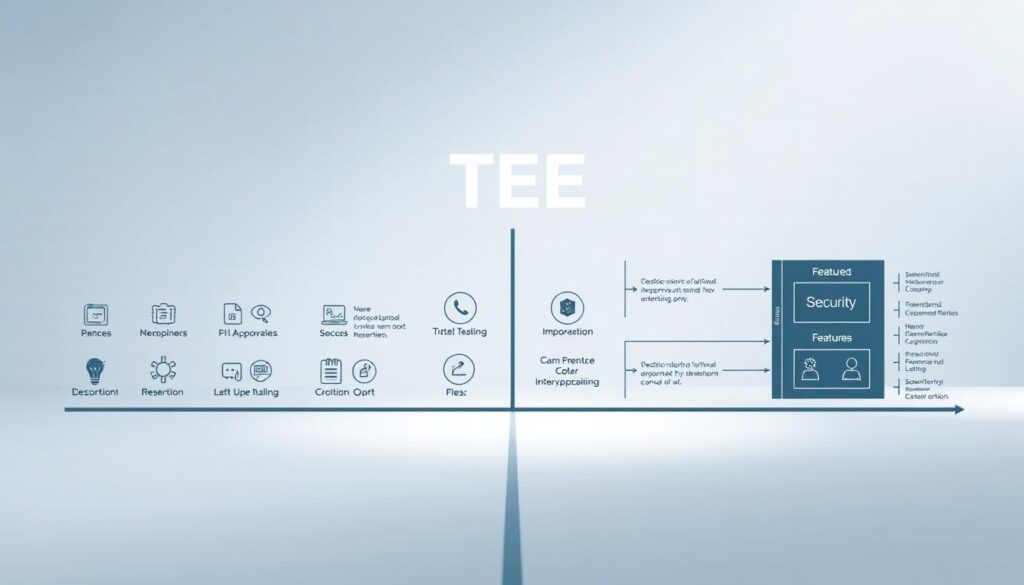
By carefully evaluating these factors and comparing different security solutions, you can make an informed decision that best suits your Web3 security needs.
With a clear vision for the future, Safeheron is paving the way for enhanced Web3 security through its TEE framework. As the company continues to innovate, its roadmap is filled with exciting developments that promise to further secure and enhance the Web3 ecosystem.
Safeheron has outlined several key features and enhancements planned for the TEE framework. These include:
These enhancements are designed to not only bolster the security of Web3 applications but also to make the framework more accessible and user-friendly for developers.
| Feature | Description | Expected Impact |
|---|---|---|
| Enhanced Security Protocols | Advanced threat protection | High |
| Performance Optimizations | Improved efficiency and scalability | Medium |
| Better Developer Tools | Simplified integration and development | High |
Safeheron is committed to fostering a strong community around its TEE framework. The company encourages developers and security experts to contribute to the project, whether through code contributions, security audits, or documentation improvements.
Community contributions can take many forms, including:
By engaging with the community, Safeheron aims to create a more robust, secure, and widely adopted TEE framework that benefits the entire Web3 ecosystem.
Safeheron’s open-source Trusted Execution Environment (TEE) framework represents a significant step forward in Web3 security, embodying the principles of open innovation. By making this powerful technology accessible to the broader community, we are contributing to a more secure and robust Web3 ecosystem.
The introduction of this framework marks a milestone in the journey towards more secure and private Web3 applications. We have explored the current state of Web3 security challenges, the core principles of TEE technology, and the benefits of an open-source approach. The integration of Intel SGX technology and the framework’s technical architecture have been highlighted as key features.
As we move forward, the potential impact of this innovation on Web3 security is substantial. We anticipate that the community-driven security improvements and transparency in cryptographic systems will accelerate innovation and collaboration. With Safeheron’s open-source TEE framework, we are paving the way for a more secure and private Web3.