Quantum Leap in Computing Cracks RSA-2048, Accelerating the Need for Post-Quantum Cryptography
April 23, 2025
0
Discover how recent breakthroughs in quantum computing are threatening RSA-2048 encryption, reshaping the future of cybersecurity and data protection.
Have you ever wondered how secure your online transactions really are? With the rapid advancements in technology, especially in quantum computing, the very foundations of encryption are being challenged. This article explores the breakthrough that has scientists cracking RSA-2048 encryption and what it means for the future of cybersecurity.
What is RSA-2048 Encryption?
RSA-2048 is one of the most common forms of public-key cryptography used to secure data transmissions across the globe. Essentially, it relies on the mathematical challenge of factoring large numbers to create a key that can encrypt and decrypt information. The larger the key, the more secure it is claimed to be. RSA-2048, specifically, utilizes a 2048-bit key, which offers a robust security level for most applications today.
Why RSA-2048 Matters
This encryption standard forms the backbone of numerous secure online transactions, including those for banking, emails, and even private messages. Your personal information relies on this encryption to remain confidential. However, as quantum computing evolves, the security RSA-2048 offers may soon be rendered obsolete.
The Quantum Leap: Breaking RSA-2048
Recently, researchers achieved a groundbreaking milestone by successfully cracking RSA-2048 using a hybrid quantum-classical algorithm. They employed a combination of quantum bits (qubits) and classical computing techniques to perform this task. This accomplishment suggests that more powerful quantum machines down the road could potentially dismantle various encryption standards much sooner than previously anticipated.
The Role of Quantum Computers
Unlike traditional computers that rely on bits, which can be either a 0 or a 1, quantum computers utilize qubits capable of being in multiple states simultaneously due to superposition. This feature allows them to process vast amounts of data at unprecedented speeds. The hybrid quantum-classical approach utilized by the researchers makes it feasible to tackle problems once thought insurmountable.
Implications for Cryptography
The implications of breaking RSA-2048 are far-reaching. Here’s a closer look at what this breakthrough means for everyone from individual users to large corporations.
Potential Threats to Blockchain Technology
Most cryptocurrencies use the Elliptic Curve Digital Signature Algorithm (ECDSA), a cryptographic method that quantum computers could theoretically break. The ramifications of this would be staggering—think of stolen funds and compromised networks.
The Post-Quantum Arms Race
Given the threats posed by quantum computing, cryptography experts and organizations are racing to develop post-quantum cryptography (PQC). Initiatives like NIST’s PQC Standardization Project aim to roll out quantum-resistant algorithms by 2024, but those timelines may be optimistic given the rapid advancement of quantum technology.
Immediate Risks and Considerations
While large-scale quantum computers aren’t mainstream yet, the notion of “harvest now, decrypt later” attacks raises alarms. This tactic involves storing encrypted data now to decrypt when quantum computers are more advanced. Enterprises and governments must consider the long-term security of their stored data.
Mitigation Strategies
Lattice-Based Cryptography: Techniques like CRYSTALS-Kyber are being explored to provide quantum-resistance.
Hash-Based Signatures: Options like XMSS are emerging as strong candidates for secure transactions in a post-quantum world.
Quantum-Secure Blockchains: Innovative platforms like QANplatform and Algorand are pioneering excellent solutions designed for quantum resistance.
The Importance of Strong Random Number Generation
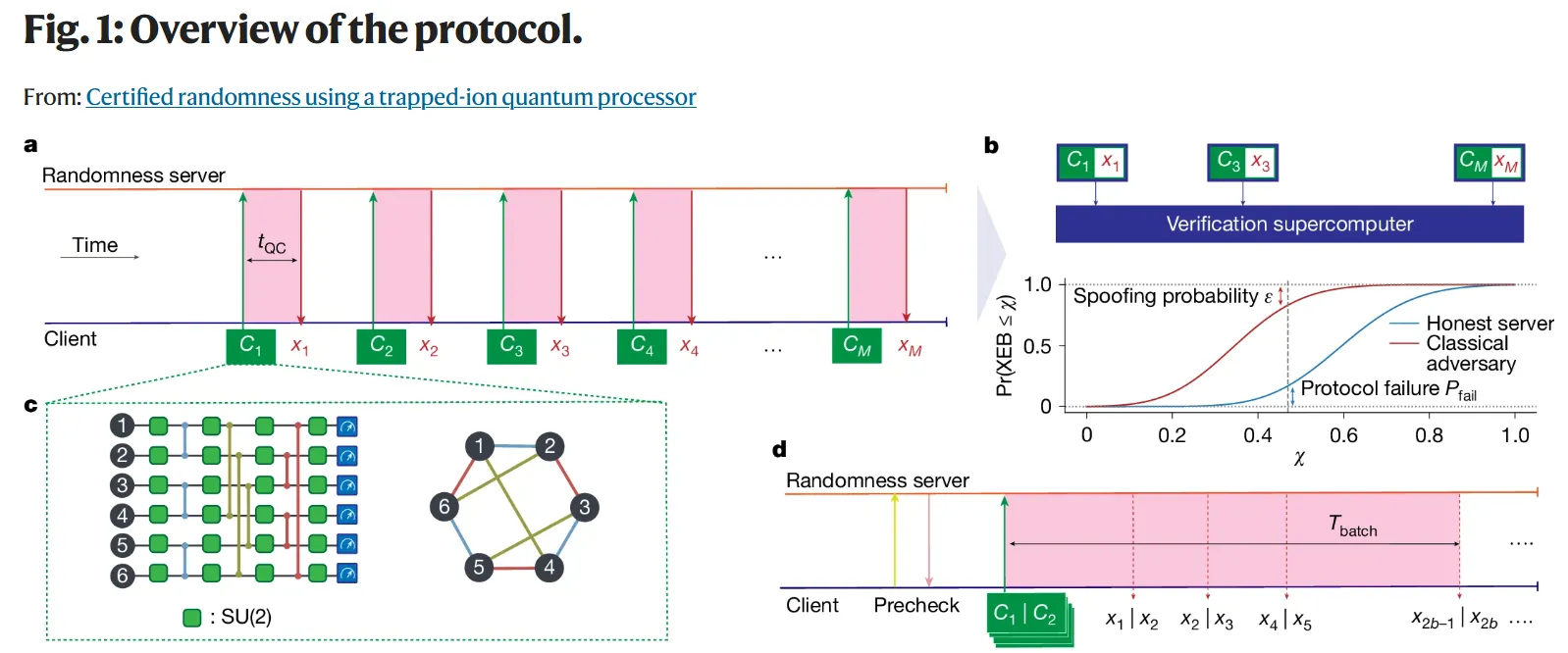
Central to encryption and secure communications is a robust random number generation. A recent study successfully demonstrated the generation of “certifiably random” numbers using a 56-qubit quantum computer, delivering over 70,000 random bits in mere seconds. This accomplishment is crucial because traditional random number generators often use algorithms that can be predicted, whereas quantum randomness ensures genuine unpredictability.
Understanding Quantum Randomness
Quantum randomness takes advantage of qubits’ ability to exist in multiple states simultaneously, producing truly indeterminate outcomes. By enhancing cryptographic security, these advancements provide a solution to numerous cybersecurity challenges.
Real-World Applications of Quantum Randomness
Strong random number generation is vital for various applications:
Online Banking: Secure transactions rely on randomness for encryption keys.
Voting Systems: Ensures integrity and fairness.
Blockchain Technologies: Offers enhanced security to maintain transactions.
The Stakes of Failing Randomness
The significance of reliable randomness cannot be overstated. Past incidents have shown how compromised randomness has led to significant financial losses. Inadequate random number generation has left systems vulnerable, underlining the need for continued advancements in this field.
Future Opportunities and Challenges
While the recent developments in quantum computing and secure random number generation show great promise, challenges remain. The necessity for powerful supercomputers for verification currently limits the implementation of these technologies.
Making Quantum Randomness Accessible
Future research holds the potential to integrate quantum randomness into a wider variety of applications—from lotteries to secure messaging systems. The aspiration is for us to enjoy an internet with greatly enhanced security protocols that almost eliminate spoofing attacks.
The Quantum vs. Blockchain Debate
As quantum computing continues to mature, some experts debate its implications on blockchain technology. Could quantum computers improve the efficiency and speed of blockchain, or are they destined to undermine its security?
The Pros of Quantum for Blockchain
Imagine a blockchain that offers instant transaction verification. Quantum technologies could facilitate immense improvements in efficiency, making networks faster and more reliable.
The Cons of Quantum for Blockchain
On the flip side, the vulnerability introduced by quantum computing means that existing blockchain infrastructures could become targets for attacks and criminal activity. The race is on to create quantum-resistant systems that address these concerns.
Preparing for a Quantum Future
Given the uncertainty surrounding the timeline for large-scale quantum computers, preparing for a post-quantum world is crucial. Individuals, organizations, and governments need to take proactive measures now to fortify their security mechanisms.
Steps to Fortify Security
Stay Informed: Knowledge is power; keeping yourself updated on developments in quantum computing can help you better understand the landscape.
Adopt New Protocols: Transition to post-quantum algorithms wherever feasible to safeguard cryptographic systems.
Collaboration and Advocacy: Engage with technology communities, policymakers, and researchers to advocate for robust quantum-resilient measures.
Conclusion: The Pivotal Moment for Cybersecurity
The breakthrough in cracking RSA-2048 encryption signifies a turning point in cybersecurity. With the emergence of quantum technologies, the need for advanced security measures is urgent. The clock is ticking, and innovative solutions are crucial to safeguard our digital future.
Staying informed and proactive about changes in technology can make a significant difference. As we navigate through this new era of quantum computing, our approach to cryptography and security must adapt and evolve. The stakes have never been higher, and the future of encryption hangs in balance.