Anthropic in Talks With Samsung to Build Custom AI Chip
Anthropic is in early talks with Samsung to build a custom AI chip. Here’s what it means for Claude pricing and UK AI investors.
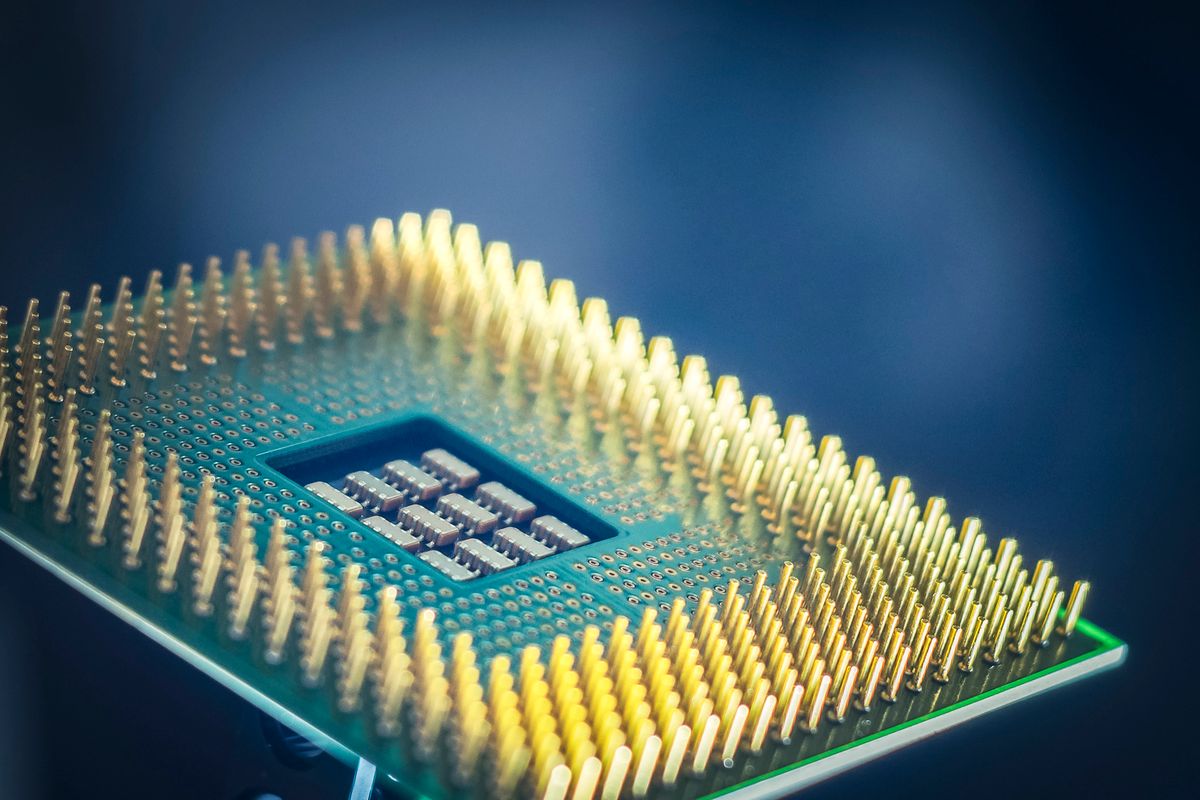
Anthropic doesn’t build hardware. It never has. That’s what makes the news from early July genuinely notable: the company behind Claude is now in talks with Samsung Electronics to manufacture a custom AI chip on Samsung’s 2-nanometer process, its first move away from renting compute exclusively from Nvidia, AWS and Google.
When I looked into why this is happening now rather than two years ago, the answer comes down to one number Anthropic has been unusually open about: a compute bill running north of $1.25 billion a month. At that scale, even a modest efficiency gain from owning part of your own chip supply chain is worth pursuing, even if the project takes years to pay off. It’s the clearest sign yet that the “just buy more Nvidia GPUs” era of AI scaling has a ceiling, even for a company as well-funded as Anthropic.
The timing lines up with a wider shift across the AI industry. Every major lab that’s reached serious scale has eventually looked at its compute bill and asked whether renting chips forever actually makes sense, or whether owning a slice of the supply chain pays for itself over a long enough horizon. Anthropic reaching that point now, rather than a year ago, tells you roughly how fast its usage has grown since Claude Code took off with developers.
What’s Actually Been Agreed
Nothing is finalised. Anthropic and Samsung are in discussions, not a signed manufacturing contract. Reporting from early July 2026 describes Anthropic exploring Samsung’s 2nm process node for a custom chip, but the company hasn’t decided what the chip will actually be used for, how it fits into server racks, or how powerful it needs to be. Chip design, testing and manufacturing haven’t begun.
That vagueness matters. It’s easy to read “custom AI chip” and picture a finished product landing in data centres next quarter. The reality is this sits at the earliest stage of a process that, for comparable projects, has taken two to four years from first talks to shipped silicon. Samsung and Anthropic haven’t confirmed a target date, and neither company has commented publicly beyond acknowledging the talks are happening. Multiple outlets, including TechCrunch and UPI, independently reported the discussions in early July, citing people familiar with the talks rather than an official announcement from either company — standard practice for stories at this stage of a corporate negotiation.
Why Every AI Lab Wants Its Own Chips
Anthropic isn’t pioneering this strategy — it’s catching up to it. OpenAI and Broadcom unveiled Jalapeño, OpenAI’s first custom inference processor, on 24 June 2026, with early deployment expected by the end of the year. Google has run its own Tensor Processing Units for years. Amazon has Trainium and Inferentia. The pattern is consistent: once an AI company’s usage reaches a certain scale, buying general-purpose GPUs from Nvidia stops being the cheapest option.
TrendForce projects that shipments of servers using cloud companies’ own custom chips will grow 44.6% in 2026, more than double the 16.1% growth expected for servers running general-purpose GPUs. That’s the industry voting with its infrastructure budgets. Every major lab still buys Nvidia hardware too — this isn’t a divorce, it’s diversification, and Nvidia’s order book remains enormous regardless of how these custom chip projects land.
Inference, Not Training, Is the Target
It’s worth being precise about what “custom AI chip” means here. Anthropic’s reported interest is in inference — the process of actually running a trained model to answer a user’s prompt — rather than training new models from scratch. Training remains Nvidia’s stronghold, and there’s no indication Anthropic plans to challenge that anytime soon.
Inference is where the maths changes fastest as a company scales. Every Claude conversation, every API call from a business integration, every automated coding session run through Claude Code burns inference compute. Millions of those requests a day, and shaving even a fraction off the per-request cost compounds into real money at Anthropic’s volume. A chip purpose-built for inference can skip capabilities a training chip needs and focus entirely on running trained weights as cheaply and quickly as possible.
Why Samsung and Why 2nm
Samsung’s 2nm process is one of the most advanced manufacturing nodes commercially available, competing directly with TSMC for the business of exactly this kind of custom AI silicon. For Samsung, landing an Anthropic contract would be a meaningful win against TSMC, which currently manufactures chips for Apple, Nvidia and most of the AI industry’s other major customers.
For Anthropic, diversifying away from a single manufacturing partner also reduces exposure to the kind of supply chain bottleneck that’s hit the entire AI industry repeatedly since 2023, when Nvidia GPU shortages left labs bidding against each other for allocation. Splitting manufacturing across Samsung and TSMC-dependent suppliers gives any AI lab more leverage in future negotiations and less exposure to a single point of failure.
Nvidia’s Position Isn’t Actually Threatened Yet
It’s tempting to read every custom chip story as bad news for Nvidia. That’s not quite right. Nvidia’s GPUs remain the default choice for training frontier models, and Anthropic, OpenAI and every other major lab continue placing enormous orders for Nvidia hardware even as they build inference alternatives. What’s changing is the margin Nvidia can charge on the inference side of the business specifically, where custom silicon is increasingly competitive on cost-per-query even if it can’t match a general-purpose GPU’s flexibility.
Analysts covering the semiconductor sector generally frame this as a gradual erosion of Nvidia’s inference market share over several years, not a sudden shift. Training demand alone is expected to keep Nvidia’s order books full well into the late 2020s.
Anthropic’s Financial Position Behind the Move
This isn’t a struggling company making a desperate bet. Anthropic is reportedly on track for roughly $47 billion in annualised revenue and profitable in 2026, driven heavily by Claude Code adoption and deep enterprise integration work. UK investors keep asking about this because it’s a rare example of an AI lab funding infrastructure ambition from actual revenue rather than pure venture capital burn.
That financial footing is precisely why a multi-year chip project is viable now. Custom silicon requires patient capital — money committed years before any chip ships, let alone earns back its development cost. A company still burning cash with no clear profitability path would struggle to justify that bet to its board. Profitability doesn’t just fund the project; it buys Anthropic the credibility to negotiate favourable terms with a manufacturing partner like Samsung in the first place.
What Could Go Wrong
Custom chip projects have a mixed track record even among giants. Meta’s early custom AI chip efforts stumbled before later iterations worked. Building a chip that outperforms what Nvidia already sells, at the volumes needed to justify the manufacturing run, is genuinely hard. Anthropic could spend two years and a significant sum only to end up with a chip that isn’t meaningfully cheaper than buying Nvidia GPUs at the prices Nvidia will be charging by then.
There’s also a talent question. Chip design teams are a different skillset entirely from the machine learning researchers Anthropic has built its reputation on. Expect hiring announcements, and possibly an acquisition of a smaller chip design firm, before this moves much further. Samsung’s own execution risk matters too — 2nm is a genuinely difficult node to manufacture at scale, and yield problems have delayed comparable projects elsewhere in the industry.
Timeline: What to Watch Next
Given how early this is, don’t expect a signed manufacturing agreement announcement for months. The more realistic near-term signals are hiring posts for chip design roles at Anthropic, any formal statement from Samsung’s semiconductor division at an investor call, or confirmation of a specific chip specification. A first test chip, if this project proceeds at all, would realistically be a 2027 story rather than a 2026 one. Anyone expecting a working product announcement before then is going to be waiting a while — these things move on chip-industry timelines, not software-release timelines.
What This Means for UK Readers
The direct impact on UK Claude users and businesses running Claude through the API is minimal in the near term — this is a multi-year infrastructure play, not something that changes pricing or performance this year. But the broader trend is worth watching if your business depends on AI tooling costs staying predictable.
As AI labs increasingly own their inference infrastructure rather than renting it, the cost structure behind tools like Claude, ChatGPT and Gemini shifts too. Cheaper inference at the infrastructure level has historically fed through to cheaper or more generous API pricing over a year or two, which is good news for UK startups building on top of these models rather than training their own.
It’s also a signal for anyone investing in the broader AI supply chain. Samsung’s semiconductor division, and the wider custom silicon market TrendForce is tracking, stands to benefit regardless of whether this specific Anthropic deal closes — the direction of travel across the entire industry points the same way, and UK-listed funds with semiconductor exposure are increasingly pricing that trend in.
Stay ahead of the market
Join our community of nearly 5,000 across YouTube, LinkedIn, X, and Facebook — weekly crypto, AI, and digital lifestyle insights every Thursday. No spam. Unsubscribe any time.
Partner picks
Build a smarter digital stack
Explore curated AI, automation, wealth, and creator tools selected for practical value, transparent pricing, and clear use cases.
Disclosure: some links may be affiliate links. DigitechLifestyle may earn a commission at no additional cost to you.