‘We Must Act Now’: 200 Economists and 16 Nobel Laureates Warn on AI Jobs
200+ economists, including 16 Nobel laureates and former AI sceptics, warn AI could reshape the economy faster than the Industrial Revolution.
Four sentences. That’s all it took. On 13 July 2026, more than 200 economists and AI researchers — sixteen of them Nobel laureates — signed an open letter warning that artificial intelligence could trigger economic upheaval bigger than the Industrial Revolution, arriving in a fraction of the time. When I first read the letter, what struck me wasn’t the warning itself. It was who signed it.
**Who Actually Signed This**
Daron Acemoglu and Simon Johnson are the names doing the heavy lifting here. The two MIT economists shared the 2024 Nobel Prize in Economic Sciences, and for years they’d been the voices pushing back against AI-displacement hype, arguing the technology’s real-world impact on jobs was overstated. Now they’re signatories on a letter saying the opposite. That reversal is the story.
Alongside them: Nobel-winning economist Michael Spence, former Google CEO Eric Schmidt, OpenAI CFO Sarah Friar, former OpenAI researcher Zoë Hitzig, and Anthropic cofounder Jack Clark. It’s a genuinely odd coalition — economists who spent a career being sceptical, sitting next to executives at the companies building the technology they’re now worried about.
**What the Letter Actually Says**
Strip away the signatures and the letter itself is short — four sentences, deliberately so. It argues AI “may become radically more powerful over the next ten years,” and that this acceleration “could drive an unprecedented transformation of our economy, larger than the Industrial Revolution, but unfolding over a vastly shorter time frame.”
That last phrase is the crux of it. The Industrial Revolution reshaped economies over roughly a century, giving labour markets, education systems, and welfare states time to adapt, however painfully. The letter’s argument is that AI-driven change could compress a century of disruption into a decade, and that none of our existing institutions were built to move that fast.
**Why the U-Turn From Acemoglu and Johnson Matters**
I’ve followed Acemoglu’s work for a while, and his scepticism about AI hype wasn’t casual — it was backed by years of labour economics research arguing that previous waves of automation created as many jobs as they destroyed, just different ones. For him to sign onto a letter warning of faster, larger disruption is a genuine shift in expert consensus, not just another tech-world doom headline.
UK investors and workers keep asking me why this particular letter is getting more attention than the dozens of AI warnings that came before it. The honest answer: it’s not celebrities or campaigners. It’s the specific economists who built their reputations on being the sober, data-driven counterweight to AI panic — now saying the panic might be underweighted, not overweighted.
**The Policy Ask, Not Just the Warning**
Here’s what a lot of coverage missed. The letter isn’t just a warning — it comes with a specific, narrow policy ask. The signatories aren’t calling for entirely new institutions or a pause on AI development. They’re calling for existing systems to move faster: shorter retraining cycles, broader unemployment insurance eligibility, and earlier warning systems for occupational displacement, rather than counting job losses after they’ve already happened.
That’s a more practical demand than it sounds. Most unemployment insurance systems, including the UK’s, were designed around the assumption that job loss happens in discrete, identifiable waves — a factory closes, a sector contracts. The letter’s argument is that AI-driven displacement could be more diffuse and continuous, and current systems aren’t built to detect or respond to that pattern until well after the damage is done.
**How This Connects to the Wider AI Safety Debate**
This letter sits alongside a separate, related effort — the “Global call for AI red lines,” which pushes for binding international agreements on AI safety limits, backed by additional Nobel laureates. The two campaigns aren’t identical, but they’re clearly part of the same broader moment: 2026 has been the year AI risk talk shifted from speculative existential concerns to concrete economic and labour-market ones.
I wasted a good hour trying to work out whether this was coordinated messaging or genuinely independent concern converging at the same time. Best I can tell, it’s the latter — different groups, different specific asks, but landing on similar timelines because the underlying models genuinely have gotten more capable, fast, over the past year.
**What This Means for UK Workers and Investors**
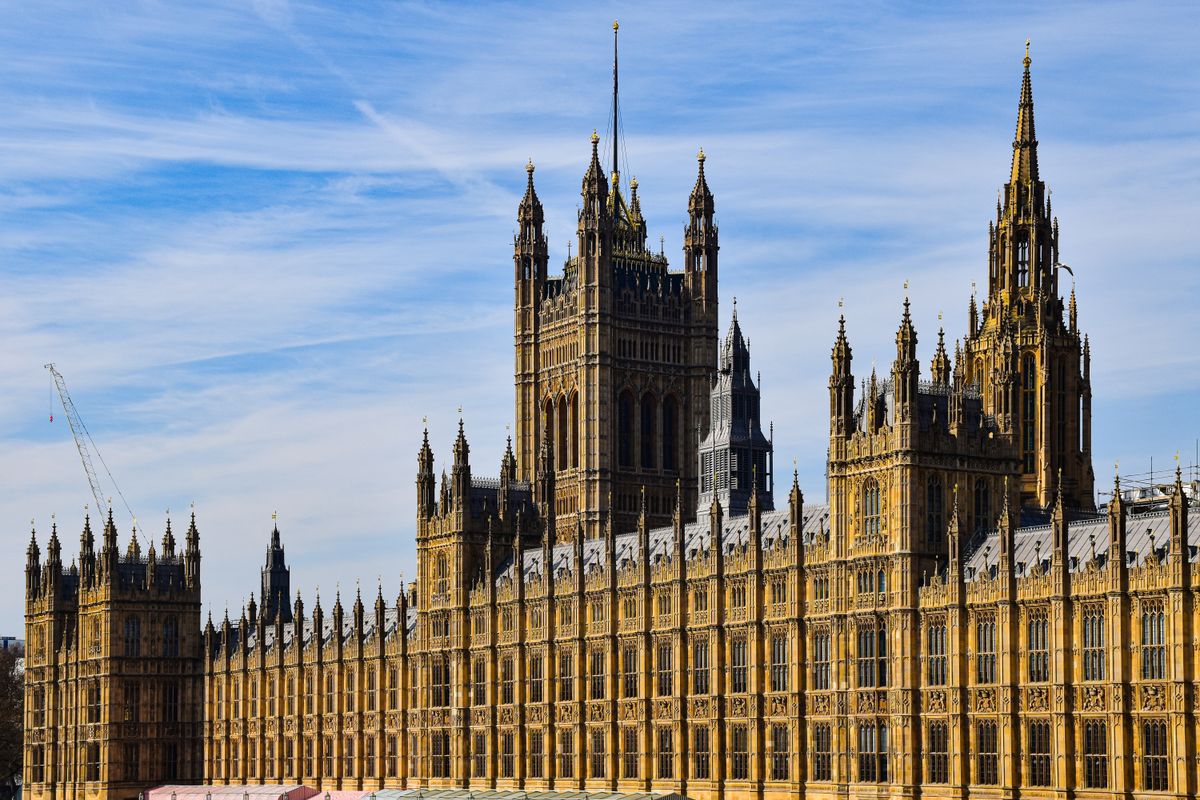
For anyone in the UK reading this and wondering what to actually do with the information: there’s no immediate policy change to react to. The letter is a call to action aimed at governments and institutions, not a regulatory announcement. Westminster hasn’t issued a formal response as of this writing.
What’s worth doing is treating this as a signal rather than a prediction. The specific economists involved built careers on caution around exactly this kind of claim — that alone is worth paying attention to, even without a crystal ball on which jobs go first or how fast.
If you’re investing in AI-exposed sectors, the letter is a reminder that regulatory and labour-market risk is a real variable, not just technical capability risk. Companies whose business models depend on rapid AI-driven headcount reduction may face political and regulatory pushback faster than markets currently price in. That’s not a reason to avoid the sector — it’s a reason to factor policy risk into valuation the same way you’d factor in interest rate risk or currency exposure.
**What History Actually Tells Us — and Where It Breaks Down**
Economists who study automation usually reach for the same historical comparisons: the mechanisation of agriculture, the rise of container shipping, the arrival of personal computing. In each case, jobs disappeared in one part of the economy and reappeared, eventually, in another. Agricultural employment in the UK fell from roughly a third of the workforce in 1900 to under 1% today, and yet unemployment didn’t permanently spike — new sectors absorbed the displaced labour, just slowly and unevenly.
The letter’s signatories aren’t disputing that pattern exists. Their argument is narrower and, honestly, harder to dismiss: the *speed* of the current transition is what’s different, not the direction. Agricultural mechanisation played out over decades. Container shipping reshaped ports over a generation. If large language models keep improving at anything like their current pace, the equivalent disruption to knowledge work — customer service, paralegal research, first-draft writing, basic coding — could compress into a handful of years rather than a generation.
That’s the part where I think the letter earns its four sentences. It’s not claiming AI will destroy net employment forever. It’s claiming the adjustment window might be too short for existing safety nets to do their job, which is a fundamentally different and more urgent claim than the usual “robots are coming for your job” headline.
**Where the UK Fits Into This Globally**
Britain isn’t named specifically in the letter, but the policy asks map fairly directly onto gaps in the UK system. Universal Credit’s job-search conditionality assumes claimants can identify and train for available roles within months — a reasonable assumption when disruption is sector-specific and slow, less reasonable if AI-driven displacement hits multiple white-collar sectors simultaneously and continuously.
The Department for Work and Pensions has commissioned reviews on “future of work” risk before, but nothing yet that treats AI-driven displacement as a distinct, faster-moving category requiring its own response mechanism, separate from generic technological change. Whether that changes as a direct result of this letter remains to be seen — open letters from economists don’t automatically become policy, however credible the signatories.
**The Retraining Question Nobody’s Answered Yet**
The letter calls for “shorter retraining cycles” without specifying what that actually looks like in practice, and that’s the honest gap in the whole conversation right now. Traditional retraining programmes — the kind built after coal mine closures or steel plant shutdowns — typically assume months to years of lead time and a reasonably stable target skill set to retrain toward.
If AI capability genuinely accelerates the way the signatories fear, the target keeps moving. Retraining someone for a role that itself gets automated within eighteen months isn’t a solved problem anywhere in the world yet, UK included. That’s arguably the single biggest unanswered question buried inside this letter’s four sentences.
Some economists outside the letter have floated ideas — wage insurance that tops up pay for workers moving into lower-paid roles, sector-agnostic skills credits instead of programme-specific retraining, faster apprenticeship accreditation. None of these are settled policy anywhere yet. They’re proposals competing for attention in exactly the kind of institutional gap this letter is trying to force onto the agenda.
**Should You Take This Seriously, or Is It Just Noise?**
Open letters get written constantly, and most vanish within a news cycle. This one’s staying power, six weeks on from initial coverage, comes down to the signatories rather than the content. When the people who spent years telling you not to panic start signing warnings, that shift itself is data — regardless of whether their forecast turns out precisely right.
**Disclaimer:** This article is for educational and informational purposes only and does not constitute financial or career advice. AI’s economic impact remains uncertain and contested among experts. Always do your own research before making investment or career decisions based on speculative forecasts.
Stay ahead of the market
Join our community of nearly 5,000 across YouTube, LinkedIn, X, and Facebook — weekly crypto, AI, and digital lifestyle insights every Thursday. No spam. Unsubscribe any time.
Partner picks
Build a smarter digital stack
Explore curated AI, automation, wealth, and creator tools selected for practical value, transparent pricing, and clear use cases.
Disclosure: some links may be affiliate links. DigitechLifestyle may earn a commission at no additional cost to you.