Psychology of Crypto Investing: Avoiding FOMO and Panic Selling
Why do crypto investors keep buying tops and selling bottoms? The psychology behind FOMO and panic selling, and practical rules UK investors can use.
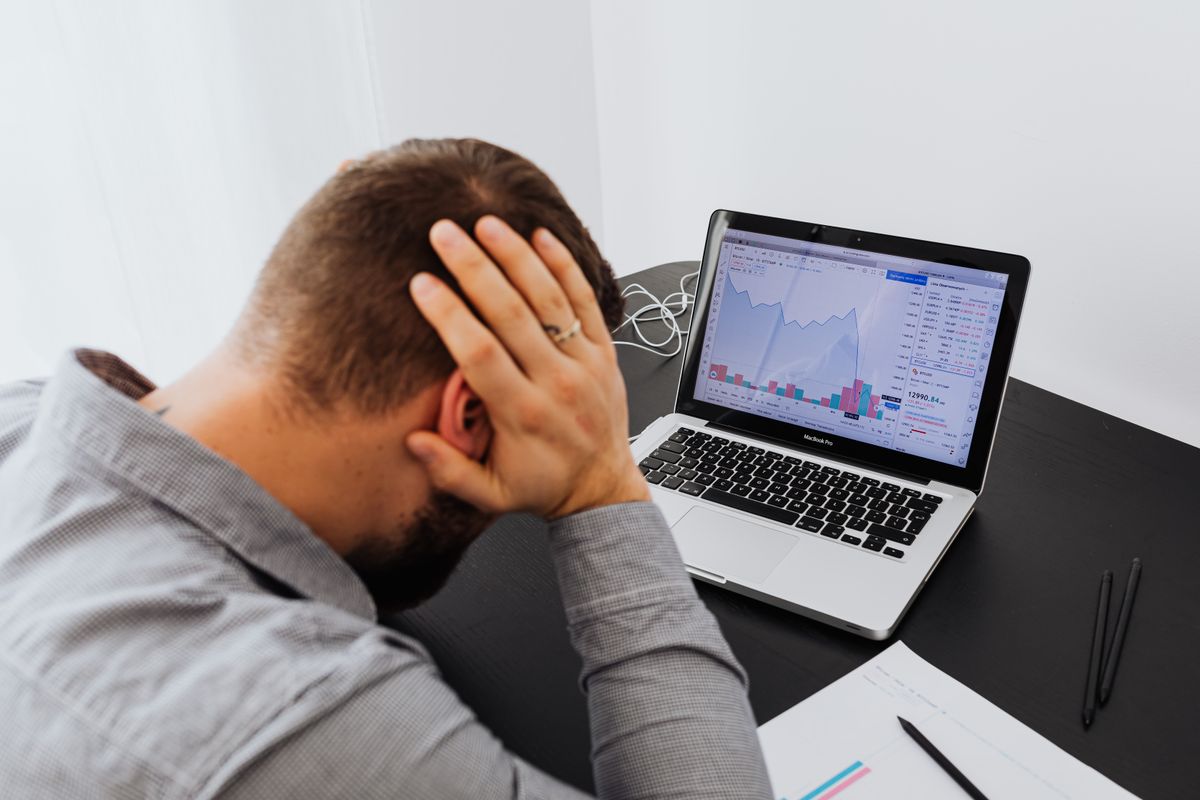
Bitcoin drops 20% overnight and your stomach lurches. Everyone in the group chat is either panicking or bragging about buying the dip. UK crypto investors keep asking me the same question after every crash: why do I always seem to buy high and sell low? The honest answer isn’t about strategy. It’s about psychology, and it’s far more predictable than most people realise once you see the pattern clearly laid out.
Why Your Brain Is Wired to Get This Wrong
Human brains evolved to react fast to threats, not to sit calmly through a volatile asset chart. When crypto prices swing 10% in an hour, your amygdala treats that like a genuine emergency.
That fight-or-flight response was useful for avoiding predators. It’s a terrible tool for deciding whether to hold Ethereum through a correction.
Evolution didn’t plan for candlestick charts.
Modern neuroscience shows the same brain regions light up during a sharp portfolio loss as during physical danger. Your body doesn’t distinguish between a falling price and a falling rock, which is exactly why “just stay calm” is such unhelpful advice on its own.
FOMO: The Fear That Makes You Buy the Top
Fear of missing out spikes hardest right after an asset has already risen sharply — exactly the worst time to buy. You see friends posting gains, headlines shouting new all-time highs, and the urge to jump in becomes almost physical.
Data from the 2021 and 2024 bull runs shows retail buying volume consistently peaked within days of local price tops. Institutional money, by contrast, tends to buy earlier and quieter.
When I looked into this pattern across multiple cycles, the same shape kept appearing. Retail FOMO is remarkably predictable, which is exactly why it’s exploitable by everyone else.
Social media accelerates this dramatically. A single viral post about a coin’s gains can trigger thousands of emotional buys within hours, long before any fundamental news justifies the move. By the time a coin trends on your feed, the easy money has usually already been made.
Panic Selling: The Fear That Makes You Sell the Bottom
The mirror image of FOMO is panic selling — dumping an asset during a crash purely because the red numbers feel unbearable, not because anything fundamental changed.
Exchanges see selling volume spike hardest during the sharpest drops, often within hours of a bottom forming. Selling into that panic locks in a loss that a few more days of patience might have avoided.
Not every crash recovers, to be fair. Some coins genuinely go to zero. The skill is telling the difference between a healthy correction and a project actually failing.
UK investors keep asking how to tell the two apart in the moment. There’s rarely a clean answer, but checking whether the underlying reason you bought has actually changed is a useful first filter. If the technology and team are unchanged, a price drop alone isn’t new information.
Loss Aversion: Why Losing £100 Hurts More Than Gaining £100 Feels Good
Behavioural economists Daniel Kahneman and Amos Tversky proved that losses hurt roughly twice as much, psychologically, as equivalent gains feel good. This is called loss aversion, and it explains a huge amount of bad crypto trading.
It’s why investors hold onto losing positions far too long, hoping to “get back to even,” while selling winning positions too early to lock in a smaller, safer gain.
Recognising this bias in yourself — even naming it out loud — measurably reduces how much it controls your decisions, according to multiple behavioural finance studies.
This same asymmetry explains why a 50% crash feels catastrophic, but the 100% gain needed to recover from it rarely feels equally euphoric. The maths is symmetric. The emotions never are, and that mismatch is where most bad decisions are actually made.
Herd Mentality and the Telegram Group Effect
Crypto Telegram and Discord groups amplify emotional decision-making far beyond what any individual investor would do alone. When ten people in a group chat are panicking simultaneously, it feels like confirmation rather than noise.
This herd effect isn’t unique to crypto — it drove tulip mania in the 1600s and the dot-com bubble in 2000. Crypto just moves faster, because trading never closes and information spreads in seconds.
Groupthink loves a chart.
Anonymous forums make this worse still. Nobody in a Telegram group has skin in your specific portfolio, yet their confidence — real or performed — shapes your decisions anyway. Some of the loudest voices in these groups have the least to lose financially.
Confirmation Bias: Why You Only See What Supports Your Position
Once you’ve bought a coin, your brain starts filtering information to support that decision. Bullish news feels more credible. Bearish warnings get dismissed as “FUD” without a fair hearing.
This bias runs both directions. Investors who missed a rally often become permanently sceptical of that asset, filtering out genuinely positive developments for years afterward.
UK investors keep falling into this trap because crypto communities reward conviction. Admitting uncertainty publicly feels weak, even when it’s the more accurate position to hold.
A simple test: try arguing the opposite case for any coin you hold. If you genuinely can’t, you’re probably not evaluating it objectively any more.
The Sunk Cost Trap
Investors who’ve already lost money on a position often add more, hoping to lower their average buy price and “make it back faster.” This is called averaging down, and it isn’t always wrong — but it’s rarely done for the right reasons.
The sunk cost fallacy convinces people that money already lost should influence future decisions. It shouldn’t. Only the current facts about a project matter for what you do next.
UK investors keep asking whether averaging down is smart. The honest answer: it can be, for genuinely undervalued assets bought with a clear plan — but it’s dangerous when it’s really just an excuse to avoid admitting a mistake.
A useful check: would you buy this position fresh today, at today’s price, knowing what you now know? If not, holding it purely to “get back to even” rarely makes sense either.
Overconfidence After a Winning Streak
A few successful trades in a row can be more dangerous than a loss. Overconfidence creeps in, position sizes grow, and risk management quietly disappears.
Behavioural studies consistently show traders take on more risk immediately after a win than after a loss, even when nothing about the market has actually changed.
Some of the biggest crypto losses on record followed a string of earlier wins that convinced the investor they’d “figured out” the market. Humility is a genuinely useful trading skill, not just a nice personality trait.
Professional traders often treat a winning streak with more caution than a losing one, precisely because that’s when discipline is hardest to maintain and easiest to abandon carelessly.
How UK Exchanges and Apps Feed These Biases
Push notifications about price moves are designed to bring you back to the app, not to help you make better decisions. Every “Bitcoin is up 8% today!” alert is engineered for engagement.
Gamified features — streaks, badges, leaderboards — borrowed from social media make trading feel like a game rather than a financial decision with real consequences.
UK regulators have started paying closer attention to this. The FCA’s ongoing consumer duty rules increasingly scrutinise whether platform design nudges users toward excessive trading.
Turning off non-essential notifications is a small, practical step that removes a surprising number of impulsive decision points from your day, and costs nothing to try.
A Quick Self-Check Before You Trade
Before placing any trade driven by strong emotion, try pausing for ten minutes and asking three questions: has anything about the underlying project actually changed, would I make this exact trade if I’d never seen anyone else’s opinion on it, and will this decision still look sensible in six months?
If the honest answer to any of those is no, that’s usually a sign the trade is being driven by fear or excitement rather than judgement. This tiny pause costs nothing and catches an enormous number of regretted trades before they happen.
Practical Rules to Break the Cycle
Set your entry and exit rules before you buy, while you’re calm, not during a price swing. Write them down somewhere you’ll actually look at again.
Consider dollar-cost averaging instead of trying to time single entries — spreading purchases over weeks or months removes a huge amount of emotional decision-making from the process.
Turn off price alerts if checking them constantly makes you anxious. Constant monitoring feeds the exact fight-or-flight response that leads to bad decisions in the first place.
Keep a simple trading journal noting why you bought or sold. Reading it back after a few months is often uncomfortable — and genuinely useful for spotting your own recurring mistakes.
What This Means for You
UK investors keep asking for a magic indicator that removes emotion from crypto trading. There isn’t one. The closest thing is self-awareness plus a written plan you actually follow.
The next time Bitcoin drops 15% in a day, or some altcoin doubles overnight, the discipline to pause before acting is worth more than any chart pattern.
Markets will keep swinging. Your job isn’t to predict every move — it’s to stop your own brain from sabotaging you at the worst possible moment.
This article is for educational purposes only and does not constitute financial advice. Cryptocurrency investments involve significant risk. Always do your own research.
Stay ahead of the market
Join our community of nearly 5,000 across YouTube, LinkedIn, X, and Facebook — weekly crypto, AI, and digital lifestyle insights every Thursday. No spam. Unsubscribe any time.
Partner picks
Build a smarter digital stack
Explore curated AI, automation, wealth, and creator tools selected for practical value, transparent pricing, and clear use cases.
Disclosure: some links may be affiliate links. DigitechLifestyle may earn a commission at no additional cost to you.