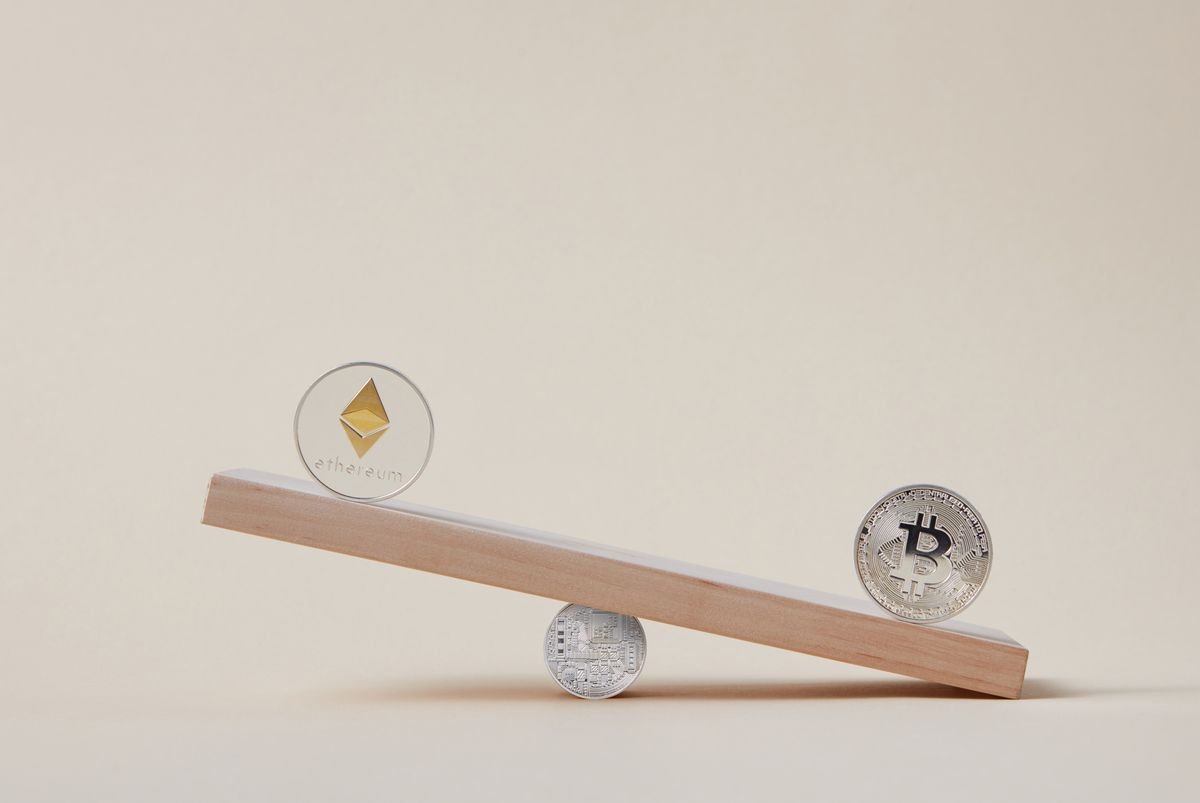
What Is Impermanent Loss? The Hidden Risk Every DeFi Investor Needs to Understand
Impermanent loss can silently erode your DeFi yields even when prices rise. Here’s how liquidity pools work, how impermanent loss happens, and what UK investors
DeFi — decentralised finance — offers yields that dwarf anything available from a UK savings account or cash ISA. You can deposit cryptocurrency into a liquidity pool on a protocol like Uniswap or Curve and earn a share of trading fees in return. But there is a hidden risk that many new DeFi investors discover only after it has already cost them money: impermanent loss. It can quietly erode your returns even when the market moves in your favour. This article explains what impermanent loss actually is, how it works mathematically, and what UK investors need to know before committing funds to a DeFi liquidity pool.
Understanding Liquidity Pools: The Foundation of DeFi
To understand impermanent loss, you first need to understand how decentralised exchanges work. Traditional exchanges — the London Stock Exchange, Coinbase, Kraken — use order books. Buyers post bids at prices they will pay; sellers post asks at prices they will accept; trades execute when the two match. This requires active market makers willing to continuously post orders at current prices to maintain liquidity.
Decentralised exchanges like Uniswap use a completely different model: automated market makers, or AMMs. Instead of order books, they rely on liquidity pools — smart contracts that hold two tokens simultaneously. When a trader wants to swap one token for another, they trade directly against the pool rather than against a human counterparty. The pool’s exchange rate adjusts automatically based on the ratio of the two tokens it holds, governed by a constant-product formula: x × y = k, where x and y are the token quantities and k is a constant that the protocol maintains.
Liquidity providers — commonly called LPs — deposit equal values of both tokens into the pool. In return, they receive LP tokens representing their proportional share of the entire pool’s assets. When traders use the pool to make swaps, they pay a protocol fee — typically 0.05% to 0.3% on Uniswap depending on the fee tier chosen — and this income is distributed proportionally to all LPs in real time. This fee income is the yield that attracts liquidity providers. But the AMM rebalancing mechanism simultaneously creates a risk that fee income may not fully compensate for: impermanent loss.
What Is Impermanent Loss and How Does It Happen?
Impermanent loss occurs when the price ratio between the two tokens in your liquidity pool changes after you make your deposit. To maintain the constant product formula (x × y = k), the AMM must continuously rebalance the pool as prices change. This means the protocol is always buying the token that is becoming relatively cheaper and selling the one that is becoming more expensive — effectively the opposite strategy to a rational investor who would hold winners and trim losers.
The result is that liquidity providers end up with a different token balance than they originally deposited — and that rebalanced position is worth less than if they had simply held the original tokens in their wallet doing nothing. The loss is called “impermanent” for a specific reason: if the price ratio between the two tokens returns exactly to where it was when you deposited, the loss mathematically disappears. The moment you withdraw your liquidity while prices differ from your entry point, however, the loss becomes permanent and unrecoverable.
Some DeFi researchers prefer the term “divergence loss” as a more accurate description of the mechanism. The loss is caused by price divergence between the two tokens — it is not related to the direction of the market overall. This is a critical distinction. Even if both of your tokens increase in value, you can still suffer significant impermanent loss if they increase at different rates. A pool containing two upward-moving assets with diverging trajectories will still rebalance against you.
A Real-World Example of Impermanent Loss
To make this concrete, consider a real example with numbers. You decide to provide liquidity to an ETH/USDC pool on Uniswap. At deposit time, ETH is priced at £2,500. You deposit 2 ETH (worth £5,000) and £5,000 of USDC, for a total position of £10,000. The pool at this moment contains a 50/50 value split. You receive LP tokens representing your share of the pool.
Now ETH’s price doubles to £5,000. On other exchanges, ETH now trades at £5,000. Arbitrage traders immediately step in to buy ETH from the Uniswap pool — where the AMM’s price has not yet caught up — and sell it on other markets at the higher price. This arbitrage continues until the pool’s internal price matches the market price of £5,000. After the AMM rebalances, you no longer hold 2 ETH. Instead, using the constant product formula, the pool now contains approximately 1.414 ETH worth £7,071 and £7,071 of USDC — a total value of £14,142. Your share of that pool is worth £7,071.
If you had simply held your original 2 ETH and £5,000 USDC without depositing into any pool, you would have 2 × £5,000 + £5,000 = £15,000. The difference — £929, approximately 6.2% of your position — is your impermanent loss. You did earn fee income during this period, which partially offsets the loss. But in a high-volatility environment where ETH doubled quickly, the fees accumulated over days or weeks rarely cover the full divergence for shorter time horizons. Research published by Topaze Blue in 2022 found that over 49% of Uniswap v3 liquidity positions resulted in negative returns net of impermanent loss, despite the fee income earned.
How Impermanent Loss Becomes Permanent
Impermanent loss crystallises into a real, permanent loss the moment you withdraw your liquidity from the pool. At that point, whatever difference exists between your pool value and the value of simply holding is locked in as an actual financial loss. There is no mechanism to reverse it once you have exchanged your LP tokens for the underlying assets.
This is why calling it “impermanent” understates the risk for many real-world investors. Markets rarely return to the exact price ratio that existed at the moment of deposit. ETH might double in price, then fall back — but almost never precisely to the original entry price. In practice, many DeFi investors who have held positions through volatile periods find that their accumulated fee income has not fully compensated for the impermanent loss when they finally withdraw, resulting in a net negative outcome compared to simply holding the tokens throughout the same period.
The only scenario where impermanent loss truly disappears is perfect mean-reversion — both tokens returning to exactly their deposit-time price ratio. For stablecoin pairs, this is essentially guaranteed because both tokens target the same fiat value. For volatile asset pairs like ETH/USDC or BTC/ETH, it is essentially never guaranteed. This is why the choice of liquidity pair is the most important decision a DeFi investor makes when entering a pool.
Which DeFi Protocols Have the Highest Risk?
The AMM design significantly affects the magnitude of impermanent loss for any given price movement. Uniswap v2 uses the classic constant product formula and distributes liquidity uniformly across all possible price ranges from zero to infinity. This is conceptually simple but highly capital-inefficient — the vast majority of deposited liquidity sits idle at extreme price points that rarely occur in practice.
Uniswap v3 introduced concentrated liquidity in May 2021, allowing LPs to concentrate their capital within a specific price range rather than spreading it across all possibilities. This dramatically increases capital efficiency and fee earnings per dollar deposited when the price remains within your chosen range. However, it dramatically amplifies impermanent loss when the price moves outside your range. At that point, you hold 100% of whichever token has become cheaper, earning zero fees until the price returns. Concentrated liquidity positions require sophisticated active management and are genuinely unsuitable for most retail investors without automated position management tools.
Curve Finance takes a different approach, optimising its AMM specifically for assets that should trade at near-identical prices — stablecoin pairs like USDC/USDT/DAI, or liquid staking derivatives like stETH/ETH. Its StableSwap formula minimises price slippage near the peg and also minimises impermanent loss for these specific pairs. Balancer allows customisable pools with more than two tokens and adjustable weightings. A pool configured as 80% ETH / 20% USDC experiences less impermanent loss than a standard 50/50 pool when ETH appreciates, because you inherently hold more of the appreciating asset throughout. The tradeoff is reduced liquidity depth and higher complexity.
Strategies to Minimise Impermanent Loss
The simplest and most reliable strategy is to provide liquidity exclusively in stablecoin pools. USDC/USDT, DAI/USDC, and similar pairings on Curve or Uniswap carry near-zero impermanent loss because both tokens target the same fiat value and diverge only fractionally during market stress events. Returns from stablecoin pools are lower than volatile-pair pools — typically 2% to 8% annual yield — but this is comparable to or better than UK savings accounts, peer-to-peer lending platforms, and money market funds, without any directional price exposure to cryptocurrency markets.
If you want exposure to volatile assets within a DeFi strategy, consider highly correlated pairs where both tokens track very similar price movements. An ETH/stETH pool is the classic example — stETH is Lido’s liquid staking token for Ethereum that tracks the ETH price almost perfectly, while accruing staking rewards. Depositing into an ETH/stETH pool captures both the pool fee income and a share of Ethereum staking yield, with minimal divergence risk because the two assets move together. As of June 2026, several hundred million dollars of capital sits in such pools across Curve Finance and similar protocols.
Time horizon matters for all pool types. Impermanent loss represents a snapshot of divergence at any given moment. Over sufficiently long periods in high-volume pools, accumulated fee income can more than offset the divergence loss — particularly in pools serving major trading pairs that generate enormous fee revenue. The ETH/USDC 0.3% fee tier on Uniswap generated over $1 billion in trading fees in 2024. However, fee revenue is not guaranteed, liquidity mining incentive programmes that boosted early DeFi yields have largely ended, and historical returns do not predict future performance.
HMRC and UK Tax on DeFi Liquidity Provision
UK tax treatment of DeFi liquidity provision was clarified significantly when HMRC published updated crypto guidance in 2024 that specifically addressed automated market makers. The core principle is complex but important: depositing assets into a liquidity pool may or may not constitute a disposal for Capital Gains Tax purposes, depending on whether genuine beneficial ownership of the underlying assets transfers to the smart contract. HMRC’s current guidance suggests that in most cases, depositing into a DeFi protocol does constitute a disposal — meaning CGT liability can arise at the point of deposit, not just withdrawal.
Fee income earned from providing liquidity is treated as income rather than capital gain and is subject to Income Tax at your marginal rate in the tax year it is received. This applies to fees distributed continuously, to governance token rewards distributed by the protocol, and to any liquidity mining incentives paid on top of standard fees. LP token appreciation between deposit and withdrawal may also trigger CGT. The £3,000 annual Capital Gains Tax allowance — reduced from £12,300 in 2023-24 — is quickly exhausted by active DeFi participants in a bull market year.
HMRC requires you to maintain comprehensive records of every deposit, withdrawal, fee accrual, and token swap associated with your DeFi activity, with GBP values recorded at the time of each transaction. This is practically impossible to do manually for active DeFi participants. Specialist crypto tax software — Koinly, CoinTracker, and Accointing all support Uniswap, Curve, and Aave through wallet address import — is strongly recommended. Incorrect DeFi tax reporting is a growing area of HMRC compliance focus, and penalties for underpayment can significantly exceed the yields earned from the underlying positions.
What This Means for UK DeFi Investors
Impermanent loss is not a reason to avoid DeFi liquidity provision entirely. It is a risk to understand precisely, quantify before entry, and manage actively. For stablecoin pairs, impermanent loss is negligible and DeFi yields can represent genuinely attractive returns relative to traditional finance. For volatile asset pairs, impermanent loss can be severe — particularly during the kind of sharp, asymmetric price moves that have characterised cryptocurrency markets throughout 2026, when Bitcoin fell from £100,000 to £47,000 in a matter of weeks.
Before depositing into any volatile-pair liquidity pool, use an impermanent loss calculator to model your specific scenario. Free tools are available at dailydefi.org and on most major DeFi protocol interfaces. Input your expected price range for each token and the calculator returns the fee income breakeven point — the minimum annualised yield you must earn to compensate for your expected impermanent loss. If the pool’s current fee APR is below this breakeven, the position is mathematically expected to underperform simple holding.
Finally, remember that DeFi protocols are not regulated by the FCA. Smart contracts have no regulator, no ombudsman, and no FSCS protection. If you lose funds to a smart contract exploit, a protocol hack, an oracle manipulation attack, or simply impermanent loss, there is no regulatory recourse and no compensation scheme. In 2024 alone, over $1.3 billion was lost to DeFi protocol exploits globally. DeFi yields can be genuinely attractive, but they exist because they involve genuine, non-trivial risks that traditional financial products do not carry. Only allocate capital you can afford to lose entirely.
This article is for educational purposes only and does not constitute financial advice.
Stay ahead of the market
Join our community of nearly 5,000 across YouTube, LinkedIn, X, and Facebook — weekly crypto, AI, and digital lifestyle insights every Thursday. No spam. Unsubscribe any time.
Partner picks
Build a smarter digital stack
Explore curated AI, automation, wealth, and creator tools selected for practical value, transparent pricing, and clear use cases.
Disclosure: some links may be affiliate links. DigitechLifestyle may earn a commission at no additional cost to you.