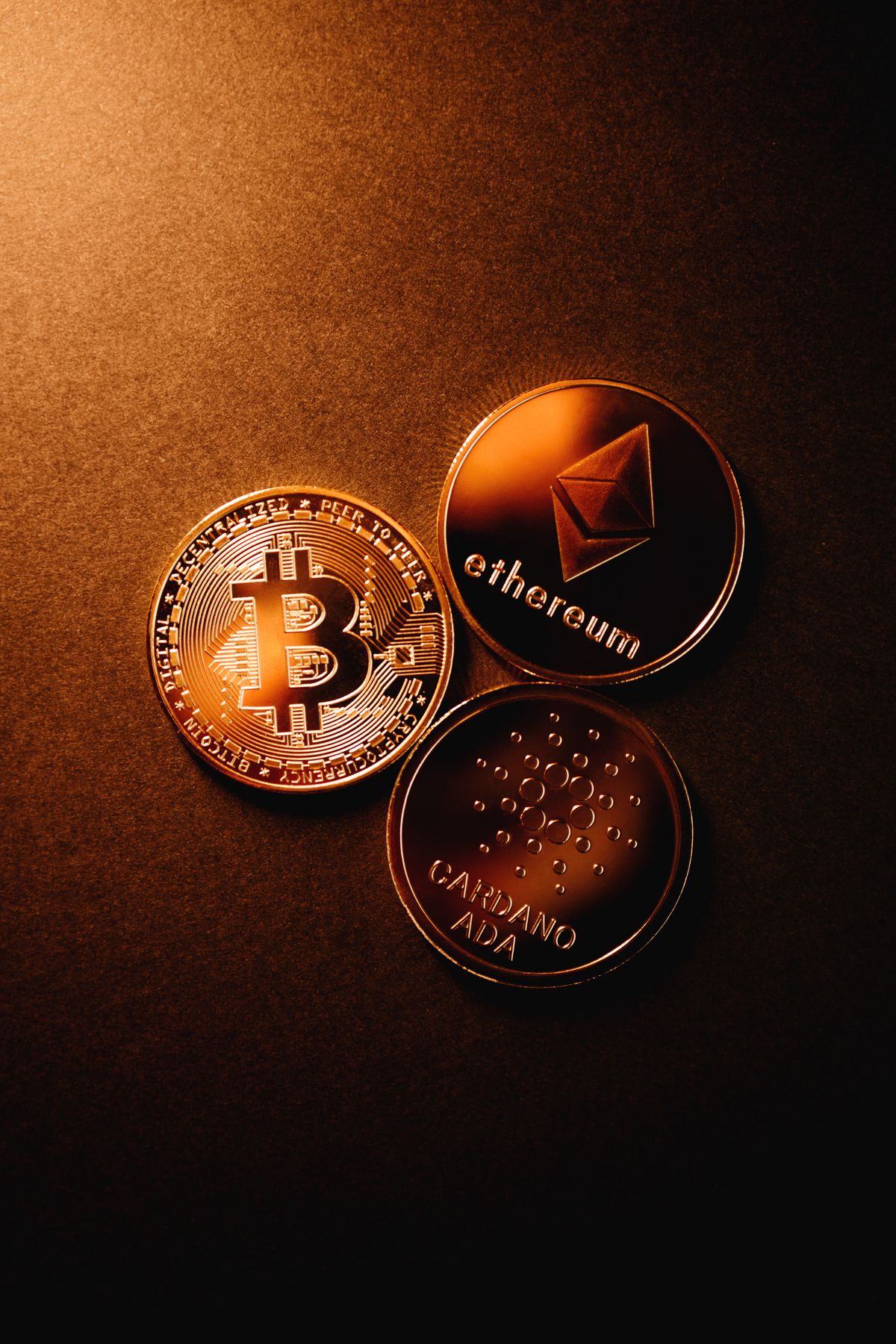
Cardano’s Van Rossem Hard Fork: What UK ADA Holders Need to Know
Cardano’s Van Rossem hard fork goes live 18 July. Here’s what it changes, and what whale buying vs short selling means for UK ADA holders.
Cardano’s biggest network upgrade in months goes live tomorrow. Most UK holders won’t notice a thing on the surface — no wallet migration, no new app to download, no action required. But underneath, the Van Rossem hard fork changes how Cardano’s smart contracts actually run, and it’s landing at a moment when whales are quietly loading up on ADA while short sellers pile in the opposite direction.
That’s not a coincidence. It’s a standoff.
What Is a Hard Fork, Anyway?
Worth explaining this properly, because the term gets thrown around loosely. A hard fork is a planned software upgrade to a blockchain’s underlying rules — think of it as a scheduled operating system update for the entire network, applied simultaneously by every computer running the software.
Node operators, exchanges, and wallet providers all need to update before the fork activates, or their software stops recognising valid transactions correctly. Some hard forks split a network into two separate chains (Bitcoin and Bitcoin Cash is the classic example). Most don’t. Van Rossem is the non-splitting kind — one chain, upgraded rules, everyone moves forward together. Bitcoin has been through similar upgrades without splitting too, most notably SegWit in 2017, which sparked heated community debate but never actually forked the chain into two competing versions.
What Is the Van Rossem Hard Fork?
Van Rossem cleared Cardano’s on-chain governance process on 13 July 2026, ratified by stake pool operators and delegated representatives (DReps) — the people who effectively run Cardano’s decentralised approval system. Activation is locked in for 18 July at 21:44:51 UTC, at block slot 192,844,800.
Intersect, the organisation coordinating Cardano’s infrastructure, has told every node operator and exchange to update their software before that slot crosses. That’s routine ahead of any hard fork, and the fact it’s proceeding without last-minute delays is itself a mildly bullish signal — plenty of blockchain upgrades slip by weeks.
Van Rossem lowers the execution cost of running smart contracts on Cardano. In plain terms: developers building apps on the network should see cheaper, faster transactions once the fork settles in. For everyday ADA holders who aren’t building anything, the direct effect is close to zero. The indirect effect — on network competitiveness and price sentiment — is where things get more interesting.
Why Upgrade Cardano Now?
Cheaper transactions sound nice on their own, but Van Rossem isn’t really the headline. It’s the groundwork.
The fork lays technical foundations for Leios, a much bigger scaling upgrade Cardano’s team is targeting before the end of 2026. Leios is meant to massively increase how many transactions the network can process per second — the kind of upgrade that determines whether Cardano can compete with faster chains like Solana on raw throughput, rather than just on theoretical security research.
I’ve watched three different “throughput upgrade” cycles play out across various blockchains over the years. The pattern repeats: the market prices in expectation months before the code ships, then reprices hard once reality lands. Van Rossem is the first domino in that chain for Cardano this cycle.
Cardano’s Track Record With Upgrades
Skeptics have reason to want proof this actually works. Cardano’s last comparable fork, Vasil, launched in September 2022 and improved smart-contract efficiency and block utilisation on the network. It shipped later than originally planned — Cardano upgrades have a reputation for conservative, sometimes slow, engineering, a direct result of founder Charles Hoskinson’s insistence on peer-reviewed research before deployment.
That caution cuts both ways. It’s why Cardano rarely suffers the embarrassing rollback-and-patch cycles that hit faster-moving chains. It’s also why “when Leios” has been a running joke in Cardano communities for over a year. Van Rossem shipping on schedule, without a governance fight or delayed vote, is a genuine data point in favour of the roadmap holding this time. It’s worth remembering Cardano’s overall approach differs from most of its rivals here: where Ethereum ships frequent incremental updates and Solana pushes rapid iteration even at the cost of occasional outages, Cardano’s peer-review-first culture means fewer surprises but longer waits between meaningful upgrades. Van Rossem has been in development and academic review for well over a year before reaching this activation slot.
The Whale vs Short-Seller Standoff
Here’s where it gets genuinely interesting for anyone holding ADA.
On-chain data shows whale accumulation — large wallets buying and holding — at its highest level since 2023. At the same time, a separate cohort of traders has been building up short positions on derivatives platforms, betting the price falls. Both sides are positioning hard, right before the same event.
That’s an unusual setup. Short sentence, deliberately: it rarely happens by accident.
When large buyers and large sellers stack up around one catalyst, the eventual move tends to be sharp rather than gradual, whichever direction it breaks. Neither side is hedging its bets much here, which tells you both groups think this fork matters more than a routine software update — even though, mechanically, most ADA holders won’t feel any difference in how their tokens behave.
Key Price Levels Traders Are Watching
According to CoinGlass liquidation data cited in market reporting around the fork, the nearest cluster of leveraged positions sits between $0.160 and $0.165, just above ADA’s current trading range. A heavier concentration sits near $0.167, which lines up with a resistance level around $0.1709 flagged on daily charts.
The logic traders are working from: a drop below $0.160 could trigger a wave of long liquidations and open a path toward $0.1465. A break above $0.170 could force short sellers to buy back their positions, adding fuel to any recovery. The 4-hour RSI reading, sitting in the mid-40s, suggests the market is drifting rather than at a clear extreme in either direction — no obvious floor from oversold conditions to lean on.
None of this is a prediction — it’s a description of where leveraged money is currently clustered. Markets don’t always respect these levels, and anyone treating a liquidation heatmap as a crystal ball is asking for trouble.
How This Fits the Wider Crypto Regulation Picture
Zoom out and Van Rossem is landing in an odd week for crypto more broadly. Across the Atlantic, the US Senate is fighting over the CLARITY Act — the bill meant to set clear market-structure rules for digital assets — with passage odds sitting around 34% and falling, according to prediction market Polymarket, largely over an unresolved dispute about ethics provisions covering officials’ crypto holdings.
UK investors keep asking me why US Senate drama matters to them. Here’s why: American market-structure clarity, or the lack of it, shapes how global exchanges list and support assets like ADA, including on UK-facing platforms. When Washington stalls, altcoin projects like Cardano lean even harder on their own technical roadmap — upgrades like Van Rossem — to keep momentum without waiting on regulators to sort themselves out.
Is Cardano Available on UK Exchanges?
Yes. ADA trades on every major FCA-registered platform UK residents commonly use — Kraken, Coinbase, and Revolut all list it, alongside dedicated apps like eToro. None of these require you to do anything for the Van Rossem upgrade itself; the fork happens at the protocol level, and custodial exchange balances update automatically without any user action.
If you hold ADA in a self-custody wallet — a Ledger, Yoroi, or Eternl setup, say — check that your wallet software is current before 18 July. Outdated wallet software occasionally throws sync errors around hard forks, though funds themselves are never at risk from the upgrade itself.
HMRC Tax Angle for UK ADA Holders
A hard fork itself isn’t a taxable event under current HMRC guidance, since you’re not receiving a new asset — Van Rossem upgrades the existing Cardano network rather than splitting it into two chains. That’s different from a contentious fork that creates a brand-new token, which HMRC would treat as a new asset acquisition with its own cost basis.
If the price swing around the fork prompts you to buy, sell, or swap ADA, that’s where Capital Gains Tax rules kick in as normal — the £3,000 annual exempt amount for 2026/27 still applies before gains become taxable. Keep records of any trades made around 18 July specifically, since sharp price moves around known catalysts are exactly the kind of thing HMRC expects clean paper trails for if they ever ask questions later.
What This Means for UK Readers
Van Rossem itself is a low-drama technical upgrade — cheaper contract execution, a stepping stone toward Leios, shipping on schedule with no governance fight. The drama is entirely in the positioning around it: heavy whale buying against heavy short interest, with $0.160 and $0.170 as the lines that decide which side wins in the short term.
If you’re holding ADA long-term for the Leios roadmap, the fork changes little day to day, and there’s genuinely nothing you need to do. If you’re trading around the event, treat the liquidation levels as context, not gospel, and size any position with the understanding that “violent move in either direction” is the base case analysts are describing here — not a guarantee of gains in your favour.
This article is for educational purposes only and does not constitute financial advice. Cryptocurrency investments involve significant risk. Always do your own research.
Stay ahead of the market
Join our community of nearly 5,000 across YouTube, LinkedIn, X, and Facebook — weekly crypto, AI, and digital lifestyle insights every Thursday. No spam. Unsubscribe any time.
Partner picks
Build a smarter digital stack
Explore curated AI, automation, wealth, and creator tools selected for practical value, transparent pricing, and clear use cases.
Disclosure: some links may be affiliate links. DigitechLifestyle may earn a commission at no additional cost to you.